
We all have an innate intelligence. And there is no limit to improvement. It doesn’t mean that what you are doing now is not enough. Nor does it mean that you should abandon the way you move now. What is important is to have a wide repertoire of movements. We need a vast range of movements to be able to do all the different things we want to do – for a long time to come. And we were really clever when we were infants and children, because we were curious enough to try to discover them all! We have just forgotten a lot now that we are older. And it’s that forgetting that limits us in more ways than you realise. So, what is Feldenkrais Method?
What is Feldenkrais Method?
The movement method called Feldenkrais was named after the man who introduced it to the world in the last midcentury. (He was a physicist and judo master – and many would say, a genius.)
What it’s not and who it’s not for
Feldenkrais method is not a therapy. It’s not a form of exercise. It’s not yoga, or stretching. And it’s not a healing modality, per sé.
It is a way to learn. It is learning to learn. And often, you can heal through learning. How? Because you feel empowered and you recover your belief that you can change from the inside out. Learning is tied to intelligence, but not in the way that we would normally associate it.
Feldenkrais has less appeal for people who look to being shaped, healed, changed or fixed by somebody or something else outside of them. It isn’t for avid perfectionists. (
What it is and why it is smart
Feldenkrais is a method to apply so you can learn. Learn what? Learn new movements? Yes and no. You learn, about yourself, through how you move (habitually) and how else you could move. In doing a movement you uncover what you think. And what you feel. And what you sense. But not always in that order. Be warned: your state of being will change.
Your experience of yourself will be different at the end of the lesson than how it was in the beginning. Yet you might feel as if you hardly did anything, because it is so slow and gentle. What you have been doing is teaching your brain what is possible for you in movement, a way of moving that you forgot you knew how to do. Including the ignored and forgotten parts of us makes things so much easier. It’s so refreshing to actually see yourself, through someone else’s eyes and hands. Feldenkrais will remind you that most of the time you want to move with maximum efficiency with minimal effort. That’s so your body uses its innate intelligence to last for decades. You don’t always discover this in the lesson itself. It might come to you hours or days or weeks afterwards, when your brain remembers the movements you did in the lesson.
Who it’s for
People with developmental challenges, injury and pain, performance issues (such as dancers, musicians, and sportspeople), and ‘regular’ people wishing to maintain and evolve their health and wellness as they navigate different life stages. All these populations have experienced deep, long-lasting transformations. Feldenkrais is perfect for people who want to feel empowered by how they face life from the inside out.
Feldenkrais is ideal for overthinkers. It brings you back into the body and uses words to move you. And if you are game to try a 1:1 session, it uses intelligent touch from a practitioner to get you thinking and totally engaged, rather than words alone. And once you get moving, you go to a place far beyond them…
If you want to be empowered, have agency over what it means to be you, and if you have trouble slowing down and sensing your life, then give Feldenkrais a go. It is facilitated with inclusion at its heart, from its languaging, to its invitations to move, and its underlying principles.
What can I expect?
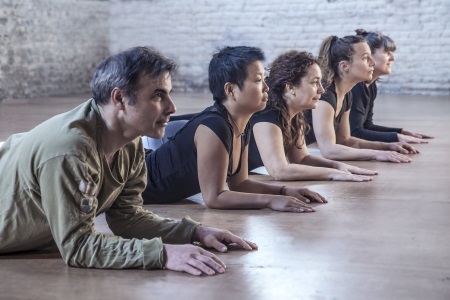
You can ‘do’ Feldenkrais in a group setting (so it looks like yoga, but isn’t yoga). It won’t be demonstrated and will be delivered only verbally. That’s because we humans are very clever at copying what we see. But when you translate words into movement, that’s when you discover what you understand. Not simply see what you ‘can’ do. When you know you are doing exactly what you think you are doing, then you can direct precisely what you want to do.
You don’t need any special gear. Quite often you’ll be lying on the floor.
In a 1:1 hands-on session (so it looks like physiotherapy or osteopathy or even clothed massage or some such, but isn’t that at all) the practitioner will be moving with you as you move, doing moves for you, or you will move and the practitioner will track your movements. Sometimes the practitioner will make suggestions or ask questions. But not verbally. They’ll ask with their hands and you will answer in your embodied response! A Feldenkrais practitioner’s touch is always consensual; you are fully clothed at all times in your regular attire. In other words, you don’t need to come prepared in a gym or yoga outfit. You could pop in before, during or after work.
In workshops we do a combination of group lessons, lectures and create a container for 1:1 experiences, either as part of a demonstration, or in a reserved section of the workshop programme. These are designed for purpose and learning objectives and are quite dynamic.

What about you?
Are you visiting this page because you know nothing about Feldenkrais, or you have just discovered it, or are you curious about learning more through embodied experiences that modalities like Feldenkrais can offer? Drop me a line – I’d love to know.
One response to “Make no mistake, this is easily the perfect choice.”
Hi, this is a comment.
To get started with moderating, editing, and deleting comments, please visit the Comments screen in the dashboard.
Commenter avatars come from Gravatar.